

Conners K-CPT 2 Continuous Performance Test Second Edition / Psychology Software / NFI CO., LTD.

Conners K-CPT 2 (Conners Kiddie Continuous Performance Test 2nd Edition)

  • Conners K-CPT 2 (Conners Kiddie Continuous Performance Test 2nd Edition)
  • serial number
  • category
    Psychology Software
  • introduce
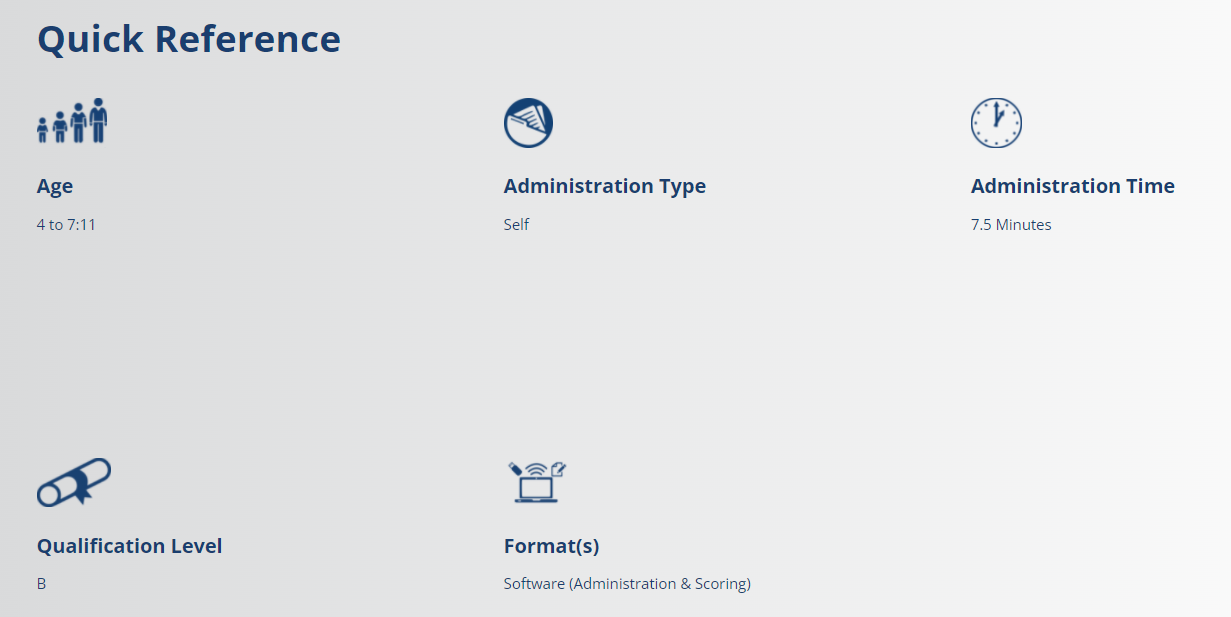
    The Conners Kiddie Continuous Performance Test 2nd Edition™ (Conners K-CPT 2™) assesses attention deficits in children aged 4 to 7 years and 11 months. Based on the well-established Conners CPT paradigm, the Conners K-CPT 2 takes only half the time to complete—approximately 7.5 minutes—making it more suitable for younger children. The results can be used for clinical assessment, early identification, and educational classification. The assessment can also be used to evaluate treatment effectiveness by administering the test before and during treatment to monitor changes over time.
  • price

K-CPT 2 Continuous Performance Test Second Edition

Overview
The Conners Kiddie Continuous Performance Test 2nd Edition™ (Conners K-CPT 2™) assesses attention deficits in children ages 4 to 7:11 years old. Based on the well-established Conners CPT paradigm, the Conners K–CPT 2 takes only half the time (7.5 minutes) to complete, making it more appropriate for younger children. Results from the measure can be used for clinical assessment,
early identification, and educational classification. The assessment can be also be used to evaluate treatment effectiveness by
administering the test before treatment and during treatment
to monitor change.

Key Features:
• Authored by Dr. C. Keith Conners, Ph.D, an internationally
   recognized academic, clinician, researcher, and expert on ADHD

• Time efficient, taking only 7.5 minutes to administer
• New normative data, collected to standardize the Conners
   K-CPT 2 scores

• New scores and scoring algorithms, developed to help
   assessors pinpoint the exact nature of the child’s attention
   problems

• Easy interpretation through redesigned computer-generated
   reports that feature clear visuals and interpretive text

• Cost-effective as a screening device using an unlimited
   software program or pay per use option (for one computer
   per user license)

Key Areas Measured
  • Inattentiveness
  • Impulsivity
  • Sustained Attention
  • Vigilance
Reports
Assessment Reports  provide detailed information about
scores from a single administration, presented both numerically and graphically. An individual's scores are compared to those in the normative sample and elevations at the
scale and subscale level are indicated.
Progress Reports  compare the results of two to four
administrations for the same individual to measure
changes
over time. These reports are ideal to use when monitoring treatment and intervention effectiveness.
How To Use
Development of the Conners K–CPT 2 was based on a normative sample of 320 four- through seven-year-old children. The normative sample was stratified to match the U.S. Census on a number of key demographic variables including gender, age, region, race/ethnicity, and parental education level. An additional clinical sample of over 100 cases of children diagnosed with ADHD and other clinical disorders were also collected.
Reliability and Validity 
Reliability 
Internal Consistency 
Split-half reliability estimates: 
Median r= .87 to .89 across gender groups in norm sample
Median r = .86 to .89 across gender in clinical sample
Test-Retest: 
Median r= .57
Interval between test administrations: 8 to 34 days
Validity 
Discriminative Validity (analysis of variance): 
Conners K-CPT 2 accurately discriminates between clinical and non-clinical groups. Both an ADHD sample and a clinical non-ADHD sample scored higher than the general population sample on the majority of the Conners K-CPT 2 scores.
Incremental Validity: 
Including Conners K-CPT 2 as part of a battery of assessments contributes to a more accurate prediction of clinical conditions. Adding the Conners K-CPT 2 to a broadband emotional and behavioural rating scale (Conners EC-P) increases the ability to predict group membership (ADHD) versus general population groups.
Normative Data
Development of the Conners K–CPT 2 was based on a normative sample of 320 four- through seven-year-old children. The normative sample was stratified to match the U.S.
Census on a number of key demographic variables including gender, age, region, race/ethnicity, and parental education level. An additional clinical sample of over 100 cases of children diagnosed with ADHD and other clinical disorders were also collected.
  •  

System Requirements

OS:
x86 processor 1.0 GHz – class computer or higher
Windows 10, Windows 11,  macOS Monterey
  •  
RAM:
2 GB of RAM memory or higher (3 GB recommended)
650 MB of hard disk space or higher

OTHER:
USB 2.0 port
A mouse or pointing device
A physical computer keyboard
  •  
    •  

Conners K-CPT 2
Conners Kiddie Continuous Performance Test 2nd Edition

Overview
Conners Kiddie Continuous Performance Test 2nd Edition™
(Conners K-CPT 2™) assesses attention deficits in children aged 4 to 7 years and 11 months. Based on the well-established Conners CPT paradigm, the Conners K-CPT 2 takes only half the time to complete (7.5 minutes), making it more suitable for younger children. The results can be used for clinical assessment, early identification, and educational classification. The assessment can also be used to evaluate treatment effectiveness by administering the test before and during treatment to monitor changes over time.

Key Features:
• Authored by Dr. C. Keith Conners, an internationally recognized ADHD scholar, clinician, researcher, and expert
• Time-efficient, requiring only 7.5 minutes to administer
• New normative data collected to standardize Conners K-CPT 2 scores
• New scores and scoring algorithms designed to help evaluators determine the specific nature of a child's attention problems
• Easy interpretation through redesigned computer-generated reports featuring clear visual displays and explanatory text
• Cost-effective as a screening tool, with either an unlimited-use software program or a pay-per-use option (one computer per user license)
Key Areas Measured
  • Inattention
  • Impulsivity
  • Sustained Attention
  • Vigilance


Assessment Report
Provides detailed information about scores from a single administration, presented both numerically and graphically. An individual's scores are compared with scores from the normative sample, with elevations displayed at the scale and subscale levels.
Progress Report 
Compares results from two to four administrations for the same individual to measure changes over time. These reports are ideal for monitoring treatment and intervention effectiveness.
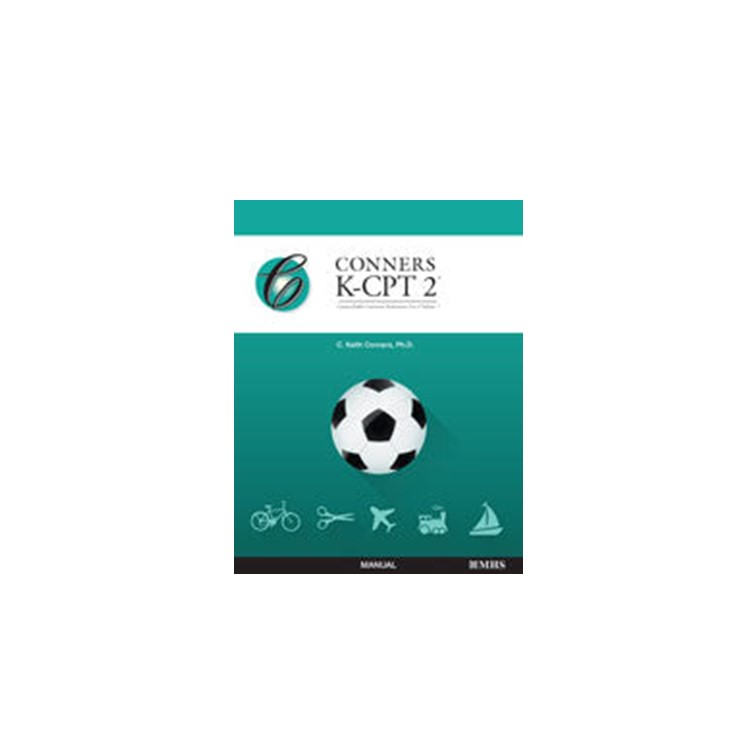
The performance-based assessment uses pictures of objects familiar to young children, such as boats, soccer balls, and trains. Children are asked to respond to targets (all objects except the soccer ball) and refrain from responding to the non-target (soccer ball) displayed on the computer screen. The Conners K-CPT 2 uses two inter-stimulus intervals (ISIs), 1.5 or 3 seconds, to help prevent practice effects that may occur when respondents learn to anticipate and prepare for stimuli. Each Conners K-CPT 2 administration includes five blocks, with each block containing one 20-trial 1.5-second ISI sub-block and one 20-trial 3-second ISI sub-block, for a total of 200 trials.
How to Use
The performance-based assessment uses pictures of objects familiar to young children, such as boats, soccer balls, and trains. Children are asked to respond to targets (all objects except the soccer ball) and refrain from responding to the non-target (soccer ball) displayed on the computer screen. The Conners K-CPT 2 uses two inter-stimulus intervals (ISIs), 1.5 or 3 seconds, to help prevent practice effects that may occur when respondents learn to anticipate and prepare for stimuli. Each Conners K-CPT 2 administration includes five blocks, with each block containing one 20-trial 1.5-second ISI sub-block and one 20-trial 3-second ISI sub-block, for a total of 200 trials.
Reliability and Validity
Reliability:

Internal Consistency
Split-Half Reliability Estimates:
Median r = .87 to .89 across gender groups in the normative sample
Median r = .86 to .89 across genders in the clinical sample
Test-Retest:
Median r = .57
Interval between test administrations: 8 to 34 days

Validity
Discriminant Validity (Analysis of Variance):
The Conners K-CPT 2 accurately distinguishes between clinical and non-clinical groups. On most Conners K-CPT 2 scores, both the ADHD sample and the clinical non-ADHD sample scored higher than the general population sample.
Incremental Validity:
Using the Conners K-CPT 2 as part of a battery of assessments helps improve the accuracy of predicting clinical status. Adding the Conners K-CPT 2 to a broadband emotional and behavioral rating scale (Conners EC-P) improves the ability to predict group membership (ADHD versus general population).
Normative Data
The Conners K-CPT 2 was developed using a normative sample of 320 children aged 4 to 7 years. The normative sample was stratified to match key demographic variables from the U.S. Census, including gender, age, geographic region, race/ethnicity, and parental education level. An additional clinical sample of more than 100 children diagnosed with ADHD and other clinical conditions was also collected.

  •  
    •  
  •  
Conners K-CPT 2 (Conners Kiddie Continuous Performance Test 2nd Edition)

Conners K-CPT 2 (Conners Kiddie Continuous Performance Test 2nd Edition)

The Conners Kiddie Continuous Performance Test 2nd Edition™ (Conners K-CPT 2™) assesses attention deficits in children aged 4 to 7 years and 11 months. Based on the well-established Conners CPT paradigm, the Conners K-CPT 2 takes only half the time to complete—approximately 7.5 minutes—making it more suitable for younger children. The results can be used for clinical assessment, early identification, and educational classification. The assessment can also be used to evaluate treatment effectiveness by administering the test before and during treatment to monitor changes over time.

Inquisit 心理學實驗統計軟體

Inquisit 心理學實驗統計軟體

Inquisit是目前最流行的心理學實驗系統和常用心理學統計軟體之一,現今被全球五大洲超過400個研究所使用,Inquisit是全世界行為科學家選擇用於創建豐富調查和量表,信號檢驗測量,內隱態度測驗,以及認知、注意和記憶等方面實驗的工具。它具有精度高、開放式回應、擴展性強、支援語音識別等特點,其獨特功能在於可透過網路收集實驗數據並對數據加密,支援基於互聯網的實驗;從架構和複雜性來看,在Inquisit中定義實驗對象如同編輯HTML檔案一樣輕鬆。

Conners CATA 注意力持續聽覺測試

Conners CATA 注意力持續聽覺測試

Conners注意力持續聽覺測試(Conners CATA ® ) 測量受訪者在註意力不集中、衝動和持續注意力方面的表現,使其成為評估注意力障礙和神經功能的有用工具。Conners CATA 提供了關於個人在註意力任務中表現的客觀信息,補充了從諸如 Conners 3 等評級量表中獲得的信息。